 IP
IPThe address 127.0.167.232 is a reserved IP. This means it has been set aside by internet standards organizations like IANA for special technical uses, and it is not assigned as a standard public or private IP. Common uses for reserved addresses include local loopback communication, network testing, multicasting, and addresses held for future use. Most people do not encounter these addresses during normal internet activity.
Used for loopback addresses to the local host, allowing devices to communicate with themselves for testing. The most common address is 127.0.0.1 (localhost), widely used in network debugging and development. Icon / Image Meaning Table
127.0.167.232 Content:
1. What is 127.0.167.232?
An IP address, like 127.0.167.232, is a unique identifier for a device on the internet. Think of it as a digital street address that allows devices to send and receive information over a network.
Technically, an IP address is a string of numbers that can be represented in different formats like binary or hexadecimal. However, the most common format you will see is dot-decimal notation, as shown below.
 Description of IP Address in Binary, Decimal and Hexadecimal
Description of IP Address Class A/B/C/D/E and Network ID, Host ID
Description of IP Address in Binary, Decimal and Hexadecimal
Description of IP Address Class A/B/C/D/E and Network ID, Host ID
How to Read an IP Address
- Four-Part Structure: A standard IPv4 address is always made up of four numbers separated by dots (periods). Addresses with fewer or more than four parts, like 127.0.167 or 127.0.167.232.1, are invalid.
- Number Range (0-255): Each of the four numbers must be between 0 and 255. An address containing a number larger than 255, such as 127.0.167.256, is invalid.
- Standard Separator: While you might occasionally see spaces or hyphens used (e.g., 127-0-167-232 or 127 0 167 232), the official and correct separator is a dot, as in 127.0.167.232.
To learn more about how IP addresses work, check out our full guide: What Is an IP Address?
3. Can 127.0.167.232 Be Used as the Router Login Address?
The address 127.0.167.232 cannot be used as a private IP address for a router's login page. To understand why, it helps to know how IP addresses are classified.
IP addresses fall into three main functional categories:
- Public IPs: Unique addresses used on the global internet, assigned by official registries.
- Private IPs: Addresses reserved by IANA for use inside local networks (like a home or office). Routers use these for their login page.
- Other Reserved IPs: Addresses reserved for special technical purposes (e.g., network testing, multicasting). They are not for general use.
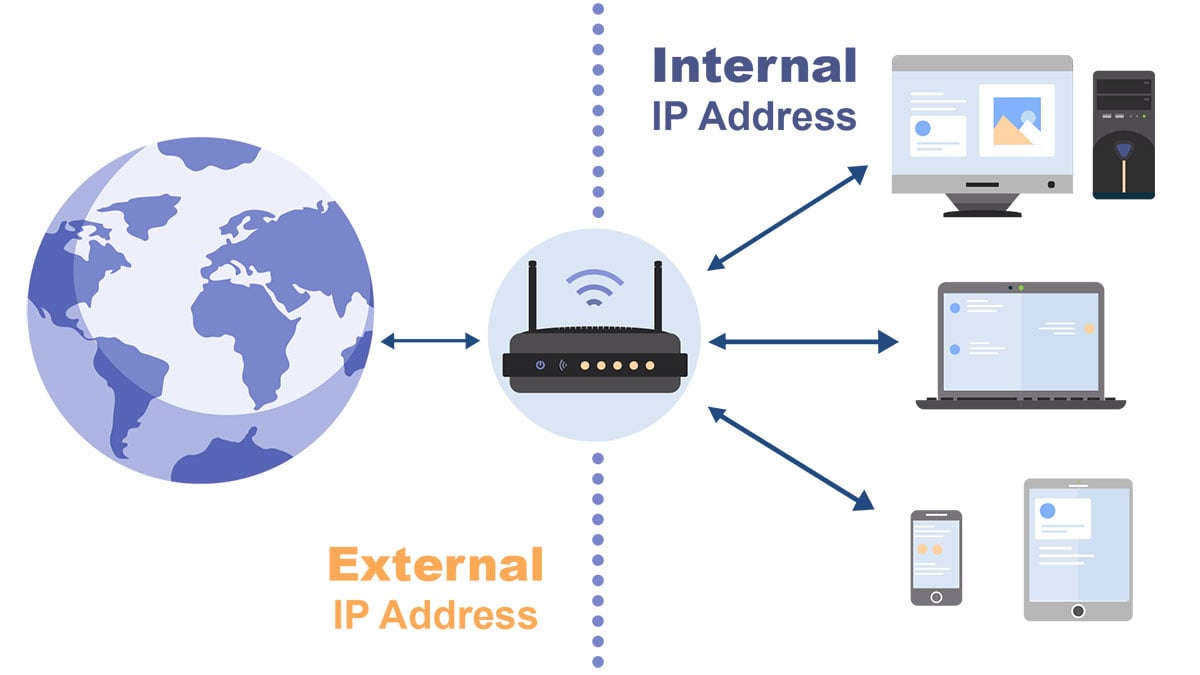
The image above illustrates the general difference between public and private IP usage.
Private IP Address Ranges
The specific ranges designated by IANA for private use are:
| Class | Address range | Number of addresses | Number of networks |
|---|---|---|---|
| Class A | 10.0.0.0 ~ 10.255.255.255 | 16777216 | 1 Class A |
| Class B | 172.16.0.0 ~ 172.31.255.255 | 1048576 | 16 Class C |
| Class C | 192.168.0.0 ~ 192.168.255.255 | 65536 | 256 Class C |
Since 127.0.167.232 does not fall within any of these designated private ranges, it is classified as a reserved address for special use, not a private address suitable for a router.
Note: Forcibly configuring a router to use 127.0.167.232 as its address will likely cause IP conflicts or other network errors, preventing it from functioning correctly.
5. Can I Find the Location of the IP Address 127.0.167.232?
The short answer is no. The geographic location of the IP address 127.0.167.232 cannot be determined because it is not a public IP address.

Here's a breakdown of why, based on the three types of IP addresses:
- Public IP Addresses: These are used on the public internet and can be traced to a specific geographic location, usually down to the city level.
- Private IP Addresses: These are used within local networks (like your home or office) and have no geographic location data associated with them.
- Reserved IP Addresses: Like private IPs, these are set aside for special technical purposes and do not correspond to a real-world geographic location.
6. How Can I Find the Administrator of 127.0.167.232?
You can use a WHOIS lookup to find the organization responsible for an IP address, including contact details like the administrator's name and phone number.

For example, a WHOIS lookup for the IP address 127.0.167.232 provides the following key details:
- Administrative Agency: SPECIAL-IPV4-LOOPBACK-IANA-RESERVED
- Description: Addresses starting with "127." are used when one program needs to talk to another program running on the same machine using the Internet Protocol. 127.0.0.1 is the most commonly used address and is called the "loopback" address. These addresses were assigned by the IETF, the organization that develops Internet protocols, in the Standard document, RFC 1122, which can be found here: http://datatracker.ietf.org/doc/rfc1122
- Country/Region:
- Address: 12025 Waterfront Drive Suite 300 Los Angeles CA 90292 United States
- Administrator: Internet Assigned Numbers Authority
- Tel: +1-310-823-9358
- E-mail: res-ip@iana.org
The WHOIS system was created so that network operators and the public can find the person or organization responsible for a network resource. This is crucial for troubleshooting technical problems (like an ISP needing to report a fault) and for reporting network abuse, such as contacting an administrator to stop spam coming from a specific IP address.
More Articles:


