 IP
IPThis is a list of all IP addresses, the first byte is 0 - 255, the following three bytes can be changed (the asterisk below), expressed as *.*.*.* (0.0.0.0 - 255.255.255.255).
IP addresses can be divided into 5 classes:
- Class A IP address: the first byte is between 0 - 127 (1.0.0.1 ~ 126.155.255.254) (127.0.0.1 is reserved address, generally used for loopback address)
- Class B IP address: the first byte is between 128 - 192 (128.0.0.1 ~ 191.255.255.254)
- Class C IP address: the first byte is between 192 - 223 (192.0.0.1 ~ 223.255.255.254)
- Class D IP address: the first byte is between 224 - 239 (224.0.0.1 ~ 239.255.255.254)
- Class E IP address: the first byte is between 240 - 255 (240.0.0.1 ~ 255.255.255.254)
 Description of IP Address in Binary, Decimal and Hexadecimal
Description of IP Address Class A/B/C/D/E and Network ID, Host ID
Description of IP Address in Binary, Decimal and Hexadecimal
Description of IP Address Class A/B/C/D/E and Network ID, Host ID
Content:
1. First IP Address Example
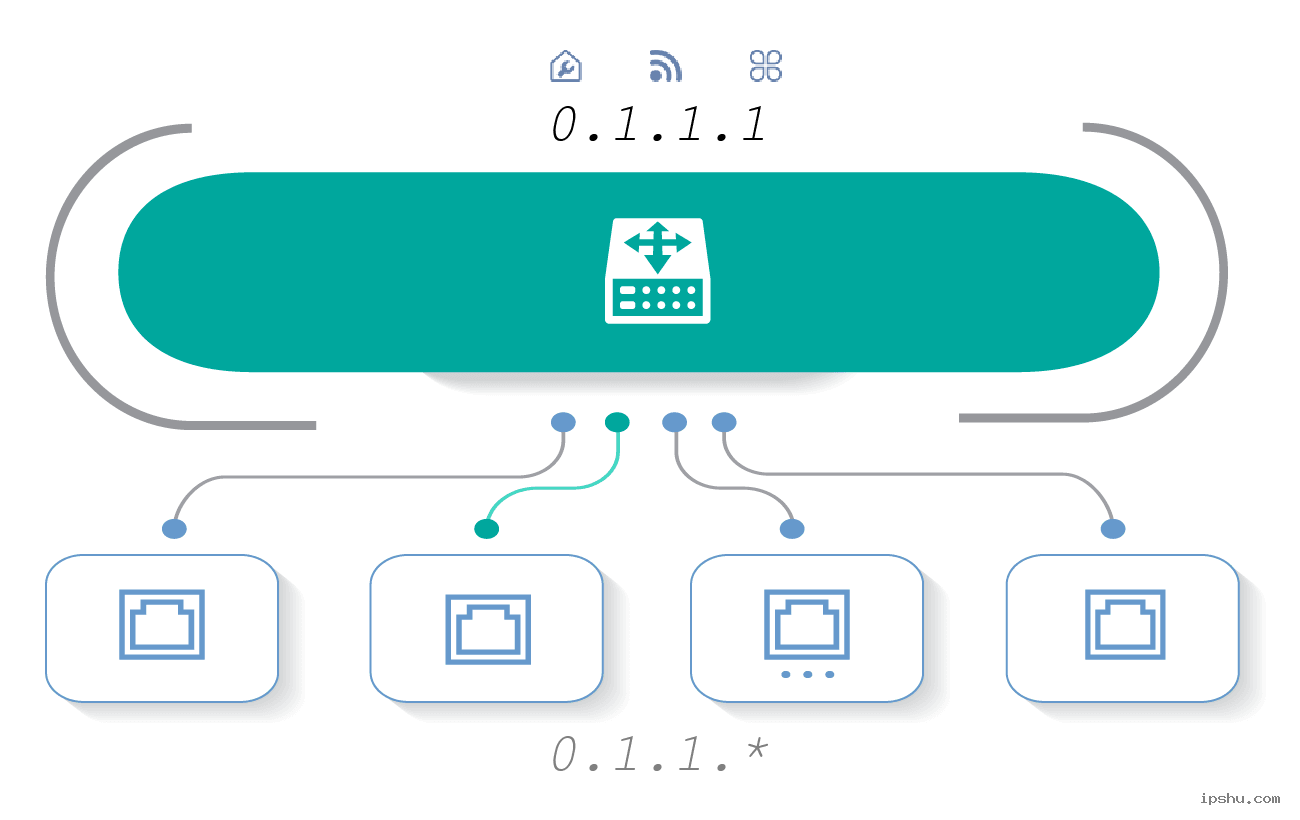 Icon / Image Meaning Table
0.0.0.0 is a reserved IP address. The reserved IP address will not be used on the Internet, so when the router connected to the WAN processes the reserved IP address, it just discards the packet and does not route it to the WAN. Thus, the data generated by the reserved IP address is isolated inside the LAN. More details: 0.0.0.0.
🔝 Back to top2. List of Class A IP Addresses
 Description of IP Address in Binary, Decimal and Hexadecimal
Description of IP Address Class A/B/C/D/E and Network ID, Host ID
Description of IP Address in Binary, Decimal and Hexadecimal
Description of IP Address Class A/B/C/D/E and Network ID, Host ID
Class A IP address means: in the four-part number of the IP address (for example: byte 1.byte 2.byte 3.byte 4), the first part number (byte 1) is the network number, the remaining three part numbers (byte 2.byte 3.byte 4) are the number of the local computer.
If the IP address is expressed in binary, the class A IP address consists of a 1-byte network address and a 3-byte host address, and the highest bit of the network address must be '0'.
Class A IP address range: 1.0.0.0 ~ 127.255.255.255, available IP address range: 1.0.0.1 ~ 127.255.255.254.
The length of the network identifier in the class A IP address is 7 bits, and the length of the host identifier is 24 bits. The number of class A network addresses is relatively small (2 ^ 7 - 2 = 126), which can be used for more than 160 millions hosts of large networks (2 ^ 24 - 2 = 16,777,214).
If you need to know more about the class A IP address parts, you can click the title link in the list of Class A IP addresses.
"- 0.*.*.*(0.0.0.0 - 0.255.255.255)
- 1.*.*.*(1.0.0.0 - 1.255.255.255)
- 2.*.*.*(2.0.0.0 - 2.255.255.255)
- 3.*.*.*(3.0.0.0 - 3.255.255.255)
- 4.*.*.*(4.0.0.0 - 4.255.255.255)
- 5.*.*.*(5.0.0.0 - 5.255.255.255)
- 6.*.*.*(6.0.0.0 - 6.255.255.255)
- 7.*.*.*(7.0.0.0 - 7.255.255.255)
- 8.*.*.*(8.0.0.0 - 8.255.255.255)
- 9.*.*.*(9.0.0.0 - 9.255.255.255)
- 10.*.*.*(10.0.0.0 - 10.255.255.255)
- 11.*.*.*(11.0.0.0 - 11.255.255.255)
- 12.*.*.*(12.0.0.0 - 12.255.255.255)
- 13.*.*.*(13.0.0.0 - 13.255.255.255)
- 14.*.*.*(14.0.0.0 - 14.255.255.255)
- 15.*.*.*(15.0.0.0 - 15.255.255.255)
- 16.*.*.*(16.0.0.0 - 16.255.255.255)
- 17.*.*.*(17.0.0.0 - 17.255.255.255)
- 18.*.*.*(18.0.0.0 - 18.255.255.255)
- 19.*.*.*(19.0.0.0 - 19.255.255.255)
- 20.*.*.*(20.0.0.0 - 20.255.255.255)
- 21.*.*.*(21.0.0.0 - 21.255.255.255)
- 22.*.*.*(22.0.0.0 - 22.255.255.255)
- 23.*.*.*(23.0.0.0 - 23.255.255.255)
- 24.*.*.*(24.0.0.0 - 24.255.255.255)
- 25.*.*.*(25.0.0.0 - 25.255.255.255)
- 26.*.*.*(26.0.0.0 - 26.255.255.255)
- 27.*.*.*(27.0.0.0 - 27.255.255.255)
- 28.*.*.*(28.0.0.0 - 28.255.255.255)
- 29.*.*.*(29.0.0.0 - 29.255.255.255)
- 30.*.*.*(30.0.0.0 - 30.255.255.255)
- 31.*.*.*(31.0.0.0 - 31.255.255.255)
- 32.*.*.*(32.0.0.0 - 32.255.255.255)
- 33.*.*.*(33.0.0.0 - 33.255.255.255)
- 34.*.*.*(34.0.0.0 - 34.255.255.255)
- 35.*.*.*(35.0.0.0 - 35.255.255.255)
- 36.*.*.*(36.0.0.0 - 36.255.255.255)
- 37.*.*.*(37.0.0.0 - 37.255.255.255)
- 38.*.*.*(38.0.0.0 - 38.255.255.255)
- 39.*.*.*(39.0.0.0 - 39.255.255.255)
- 40.*.*.*(40.0.0.0 - 40.255.255.255)
- 41.*.*.*(41.0.0.0 - 41.255.255.255)
- 42.*.*.*(42.0.0.0 - 42.255.255.255)
- 43.*.*.*(43.0.0.0 - 43.255.255.255)
- 44.*.*.*(44.0.0.0 - 44.255.255.255)
- 45.*.*.*(45.0.0.0 - 45.255.255.255)
- 46.*.*.*(46.0.0.0 - 46.255.255.255)
- 47.*.*.*(47.0.0.0 - 47.255.255.255)
- 48.*.*.*(48.0.0.0 - 48.255.255.255)
- 49.*.*.*(49.0.0.0 - 49.255.255.255)
- 50.*.*.*(50.0.0.0 - 50.255.255.255)
- 51.*.*.*(51.0.0.0 - 51.255.255.255)
- 52.*.*.*(52.0.0.0 - 52.255.255.255)
- 53.*.*.*(53.0.0.0 - 53.255.255.255)
- 54.*.*.*(54.0.0.0 - 54.255.255.255)
- 55.*.*.*(55.0.0.0 - 55.255.255.255)
- 56.*.*.*(56.0.0.0 - 56.255.255.255)
- 57.*.*.*(57.0.0.0 - 57.255.255.255)
- 58.*.*.*(58.0.0.0 - 58.255.255.255)
- 59.*.*.*(59.0.0.0 - 59.255.255.255)
- 60.*.*.*(60.0.0.0 - 60.255.255.255)
- 61.*.*.*(61.0.0.0 - 61.255.255.255)
- 62.*.*.*(62.0.0.0 - 62.255.255.255)
- 63.*.*.*(63.0.0.0 - 63.255.255.255)
- 64.*.*.*(64.0.0.0 - 64.255.255.255)
- 65.*.*.*(65.0.0.0 - 65.255.255.255)
- 66.*.*.*(66.0.0.0 - 66.255.255.255)
- 67.*.*.*(67.0.0.0 - 67.255.255.255)
- 68.*.*.*(68.0.0.0 - 68.255.255.255)
- 69.*.*.*(69.0.0.0 - 69.255.255.255)
- 70.*.*.*(70.0.0.0 - 70.255.255.255)
- 71.*.*.*(71.0.0.0 - 71.255.255.255)
- 72.*.*.*(72.0.0.0 - 72.255.255.255)
- 73.*.*.*(73.0.0.0 - 73.255.255.255)
- 74.*.*.*(74.0.0.0 - 74.255.255.255)
- 75.*.*.*(75.0.0.0 - 75.255.255.255)
- 76.*.*.*(76.0.0.0 - 76.255.255.255)
- 77.*.*.*(77.0.0.0 - 77.255.255.255)
- 78.*.*.*(78.0.0.0 - 78.255.255.255)
- 79.*.*.*(79.0.0.0 - 79.255.255.255)
- 80.*.*.*(80.0.0.0 - 80.255.255.255)
- 81.*.*.*(81.0.0.0 - 81.255.255.255)
- 82.*.*.*(82.0.0.0 - 82.255.255.255)
- 83.*.*.*(83.0.0.0 - 83.255.255.255)
- 84.*.*.*(84.0.0.0 - 84.255.255.255)
- 85.*.*.*(85.0.0.0 - 85.255.255.255)
- 86.*.*.*(86.0.0.0 - 86.255.255.255)
- 87.*.*.*(87.0.0.0 - 87.255.255.255)
- 88.*.*.*(88.0.0.0 - 88.255.255.255)
- 89.*.*.*(89.0.0.0 - 89.255.255.255)
- 90.*.*.*(90.0.0.0 - 90.255.255.255)
- 91.*.*.*(91.0.0.0 - 91.255.255.255)
- 92.*.*.*(92.0.0.0 - 92.255.255.255)
- 93.*.*.*(93.0.0.0 - 93.255.255.255)
- 94.*.*.*(94.0.0.0 - 94.255.255.255)
- 95.*.*.*(95.0.0.0 - 95.255.255.255)
- 96.*.*.*(96.0.0.0 - 96.255.255.255)
- 97.*.*.*(97.0.0.0 - 97.255.255.255)
- 98.*.*.*(98.0.0.0 - 98.255.255.255)
- 99.*.*.*(99.0.0.0 - 99.255.255.255)
- 100.*.*.*(100.0.0.0 - 100.255.255.255)
- 101.*.*.*(101.0.0.0 - 101.255.255.255)
- 102.*.*.*(102.0.0.0 - 102.255.255.255)
- 103.*.*.*(103.0.0.0 - 103.255.255.255)
- 104.*.*.*(104.0.0.0 - 104.255.255.255)
- 105.*.*.*(105.0.0.0 - 105.255.255.255)
- 106.*.*.*(106.0.0.0 - 106.255.255.255)
- 107.*.*.*(107.0.0.0 - 107.255.255.255)
- 108.*.*.*(108.0.0.0 - 108.255.255.255)
- 109.*.*.*(109.0.0.0 - 109.255.255.255)
- 110.*.*.*(110.0.0.0 - 110.255.255.255)
- 111.*.*.*(111.0.0.0 - 111.255.255.255)
- 112.*.*.*(112.0.0.0 - 112.255.255.255)
- 113.*.*.*(113.0.0.0 - 113.255.255.255)
- 114.*.*.*(114.0.0.0 - 114.255.255.255)
- 115.*.*.*(115.0.0.0 - 115.255.255.255)
- 116.*.*.*(116.0.0.0 - 116.255.255.255)
- 117.*.*.*(117.0.0.0 - 117.255.255.255)
- 118.*.*.*(118.0.0.0 - 118.255.255.255)
- 119.*.*.*(119.0.0.0 - 119.255.255.255)
- 120.*.*.*(120.0.0.0 - 120.255.255.255)
- 121.*.*.*(121.0.0.0 - 121.255.255.255)
- 122.*.*.*(122.0.0.0 - 122.255.255.255)
- 123.*.*.*(123.0.0.0 - 123.255.255.255)
- 124.*.*.*(124.0.0.0 - 124.255.255.255)
- 125.*.*.*(125.0.0.0 - 125.255.255.255)
- 126.*.*.*(126.0.0.0 - 126.255.255.255)
- 127.*.*.*(127.0.0.0 - 127.255.255.255)
3. List of Class B IP Addresses
 Description of IP Address in Binary, Decimal and Hexadecimal
Description of IP Address Class A/B/C/D/E and Network ID, Host ID
Description of IP Address in Binary, Decimal and Hexadecimal
Description of IP Address Class A/B/C/D/E and Network ID, Host ID
Class B IP address means: in the four-part number of the IP address (for example: byte 1.byte 2.byte 3.byte 4), the first two part numbers (byte 1.byte 2) are the network number, and the remaining two part numbers (byte 3.byte 4) are the number of the local computer.
If the IP address is expressed in binary, the class B IP address consists of a 2-byte network address and a 2-byte host address, and the highest bit of the network address must be '10'.
Class B IP address range: 128.0.0.0 ~ 191.255.255.255, available IP address range: 128.0.0.1 ~ 191.255.255.254.
The length of the network identifier in the class B IP address is 14 bits, and the length of the host identifier is 16 bits. The class B network addresses are suitable for medium-scale networks (2 ^ 14 = 16384), each network can contain more than 60,000 computers (2 ^ 16 - 2 = 65534).
If you need to know more about the class B IP address parts, you can click the title link in the list of class B IP addresses.
- 128.*.*.*(128.0.0.0 - 128.255.255.255)
- 129.*.*.*(129.0.0.0 - 129.255.255.255)
- 130.*.*.*(130.0.0.0 - 130.255.255.255)
- 131.*.*.*(131.0.0.0 - 131.255.255.255)
- 132.*.*.*(132.0.0.0 - 132.255.255.255)
- 133.*.*.*(133.0.0.0 - 133.255.255.255)
- 134.*.*.*(134.0.0.0 - 134.255.255.255)
- 135.*.*.*(135.0.0.0 - 135.255.255.255)
- 136.*.*.*(136.0.0.0 - 136.255.255.255)
- 137.*.*.*(137.0.0.0 - 137.255.255.255)
- 138.*.*.*(138.0.0.0 - 138.255.255.255)
- 139.*.*.*(139.0.0.0 - 139.255.255.255)
- 140.*.*.*(140.0.0.0 - 140.255.255.255)
- 141.*.*.*(141.0.0.0 - 141.255.255.255)
- 142.*.*.*(142.0.0.0 - 142.255.255.255)
- 143.*.*.*(143.0.0.0 - 143.255.255.255)
- 144.*.*.*(144.0.0.0 - 144.255.255.255)
- 145.*.*.*(145.0.0.0 - 145.255.255.255)
- 146.*.*.*(146.0.0.0 - 146.255.255.255)
- 147.*.*.*(147.0.0.0 - 147.255.255.255)
- 148.*.*.*(148.0.0.0 - 148.255.255.255)
- 149.*.*.*(149.0.0.0 - 149.255.255.255)
- 150.*.*.*(150.0.0.0 - 150.255.255.255)
- 151.*.*.*(151.0.0.0 - 151.255.255.255)
- 152.*.*.*(152.0.0.0 - 152.255.255.255)
- 153.*.*.*(153.0.0.0 - 153.255.255.255)
- 154.*.*.*(154.0.0.0 - 154.255.255.255)
- 155.*.*.*(155.0.0.0 - 155.255.255.255)
- 156.*.*.*(156.0.0.0 - 156.255.255.255)
- 157.*.*.*(157.0.0.0 - 157.255.255.255)
- 158.*.*.*(158.0.0.0 - 158.255.255.255)
- 159.*.*.*(159.0.0.0 - 159.255.255.255)
- 160.*.*.*(160.0.0.0 - 160.255.255.255)
- 161.*.*.*(161.0.0.0 - 161.255.255.255)
- 162.*.*.*(162.0.0.0 - 162.255.255.255)
- 163.*.*.*(163.0.0.0 - 163.255.255.255)
- 164.*.*.*(164.0.0.0 - 164.255.255.255)
- 165.*.*.*(165.0.0.0 - 165.255.255.255)
- 166.*.*.*(166.0.0.0 - 166.255.255.255)
- 167.*.*.*(167.0.0.0 - 167.255.255.255)
- 168.*.*.*(168.0.0.0 - 168.255.255.255)
- 169.*.*.*(169.0.0.0 - 169.255.255.255)
- 170.*.*.*(170.0.0.0 - 170.255.255.255)
- 171.*.*.*(171.0.0.0 - 171.255.255.255)
- 172.*.*.*(172.0.0.0 - 172.255.255.255)
- 173.*.*.*(173.0.0.0 - 173.255.255.255)
- 174.*.*.*(174.0.0.0 - 174.255.255.255)
- 175.*.*.*(175.0.0.0 - 175.255.255.255)
- 176.*.*.*(176.0.0.0 - 176.255.255.255)
- 177.*.*.*(177.0.0.0 - 177.255.255.255)
- 178.*.*.*(178.0.0.0 - 178.255.255.255)
- 179.*.*.*(179.0.0.0 - 179.255.255.255)
- 180.*.*.*(180.0.0.0 - 180.255.255.255)
- 181.*.*.*(181.0.0.0 - 181.255.255.255)
- 182.*.*.*(182.0.0.0 - 182.255.255.255)
- 183.*.*.*(183.0.0.0 - 183.255.255.255)
- 184.*.*.*(184.0.0.0 - 184.255.255.255)
- 185.*.*.*(185.0.0.0 - 185.255.255.255)
- 186.*.*.*(186.0.0.0 - 186.255.255.255)
- 187.*.*.*(187.0.0.0 - 187.255.255.255)
- 188.*.*.*(188.0.0.0 - 188.255.255.255)
- 189.*.*.*(189.0.0.0 - 189.255.255.255)
- 190.*.*.*(190.0.0.0 - 190.255.255.255)
- 191.*.*.*(191.0.0.0 - 191.255.255.255)
4. List of Class C IP Addresses
 Description of IP Address in Binary, Decimal and Hexadecimal
Description of IP Address Class A/B/C/D/E and Network ID, Host ID
Description of IP Address in Binary, Decimal and Hexadecimal
Description of IP Address Class A/B/C/D/E and Network ID, Host ID
Class C IP address means: in the four-part number of the IP address (for example: byte 1.byte 2.byte 3.byte 4), the first three part numbers (byte 1.byte 2.byte 3) are the network number, and the remaining part number (byte 4) is the number of the local computer.
If the IP address is expressed in binary, the class C IP address consists of a 3-byte network address and a 1-byte host address, and the highest bit of the network address must be '110'.
Class C IP address range: 192.0.0.0 ~ 223.255.255.255, available IP address range: 192.0.0.1 ~ 223.255.255.254.
The length of the network identifier in the class C IP address is 21 bits, and the length of the host identifier is 8 bits. The number of class C network addresses is large (2 ^ 21 = 2097152). They are suitable for small-scale local area networks, each network can only contain up to 254 computers (2 ^ 8 - 2 = 254).
If you need to know more about the class C IP address parts, you can click the title link in the list of class C IP addresses.
- 192.*.*.*(192.0.0.0 - 192.255.255.255)
- 193.*.*.*(193.0.0.0 - 193.255.255.255)
- 194.*.*.*(194.0.0.0 - 194.255.255.255)
- 195.*.*.*(195.0.0.0 - 195.255.255.255)
- 196.*.*.*(196.0.0.0 - 196.255.255.255)
- 197.*.*.*(197.0.0.0 - 197.255.255.255)
- 198.*.*.*(198.0.0.0 - 198.255.255.255)
- 199.*.*.*(199.0.0.0 - 199.255.255.255)
- 200.*.*.*(200.0.0.0 - 200.255.255.255)
- 201.*.*.*(201.0.0.0 - 201.255.255.255)
- 202.*.*.*(202.0.0.0 - 202.255.255.255)
- 203.*.*.*(203.0.0.0 - 203.255.255.255)
- 204.*.*.*(204.0.0.0 - 204.255.255.255)
- 205.*.*.*(205.0.0.0 - 205.255.255.255)
- 206.*.*.*(206.0.0.0 - 206.255.255.255)
- 207.*.*.*(207.0.0.0 - 207.255.255.255)
- 208.*.*.*(208.0.0.0 - 208.255.255.255)
- 209.*.*.*(209.0.0.0 - 209.255.255.255)
- 210.*.*.*(210.0.0.0 - 210.255.255.255)
- 211.*.*.*(211.0.0.0 - 211.255.255.255)
- 212.*.*.*(212.0.0.0 - 212.255.255.255)
- 213.*.*.*(213.0.0.0 - 213.255.255.255)
- 214.*.*.*(214.0.0.0 - 214.255.255.255)
- 215.*.*.*(215.0.0.0 - 215.255.255.255)
- 216.*.*.*(216.0.0.0 - 216.255.255.255)
- 217.*.*.*(217.0.0.0 - 217.255.255.255)
- 218.*.*.*(218.0.0.0 - 218.255.255.255)
- 219.*.*.*(219.0.0.0 - 219.255.255.255)
- 220.*.*.*(220.0.0.0 - 220.255.255.255)
- 221.*.*.*(221.0.0.0 - 221.255.255.255)
- 222.*.*.*(222.0.0.0 - 222.255.255.255)
- 223.*.*.*(223.0.0.0 - 223.255.255.255)
5. List of Class D IP Addresses
 Description of IP Address in Binary, Decimal and Hexadecimal
Description of IP Address Class A/B/C/D/E and Network ID, Host ID
Description of IP Address in Binary, Decimal and Hexadecimal
Description of IP Address Class A/B/C/D/E and Network ID, Host ID
The first 4 bits of the class D address are always 1110, the preset first 3 bits are 1 means that the class D address starts at 128 + 64 + 32 = 224, and the fourth bit is 0 means the maximum value of the class D address is 128 + 64 + 32 + 8 + 4 + 2 + 1 = 239.
Class D IP address range: 224.0.0.0 ~ 239.255.255.255.
Class D IPv4 addresses do not distinguish between network addresses and host addresses.
Class D IP addresses are reserved for use by the Internet Architecture Board (IAB) for multicast addresses (one-to-many communication).
If you need to know more about the class D IP address parts, you can click the title link in the list of class D IP addresses.
- 224.*.*.*(224.0.0.0 - 224.255.255.255)
- 225.*.*.*(225.0.0.0 - 225.255.255.255)
- 226.*.*.*(226.0.0.0 - 226.255.255.255)
- 227.*.*.*(227.0.0.0 - 227.255.255.255)
- 228.*.*.*(228.0.0.0 - 228.255.255.255)
- 229.*.*.*(229.0.0.0 - 229.255.255.255)
- 230.*.*.*(230.0.0.0 - 230.255.255.255)
- 231.*.*.*(231.0.0.0 - 231.255.255.255)
- 232.*.*.*(232.0.0.0 - 232.255.255.255)
- 233.*.*.*(233.0.0.0 - 233.255.255.255)
- 234.*.*.*(234.0.0.0 - 234.255.255.255)
- 235.*.*.*(235.0.0.0 - 235.255.255.255)
- 236.*.*.*(236.0.0.0 - 236.255.255.255)
- 237.*.*.*(237.0.0.0 - 237.255.255.255)
- 238.*.*.*(238.0.0.0 - 238.255.255.255)
- 239.*.*.*(239.0.0.0 - 239.255.255.255)
6. List of Class E IP Addresses
 Description of IP Address in Binary, Decimal and Hexadecimal
Description of IP Address Class A/B/C/D/E and Network ID, Host ID
Description of IP Address in Binary, Decimal and Hexadecimal
Description of IP Address Class A/B/C/D/E and Network ID, Host ID
The first 4 bits of the class E address are always 1111, and the preset first 4 bits are 1 which means that the class E address starts at 128 + 64 + 32 + 16 = 240.
Class E IP address range: 240.0.0.0 ~ 255.255.255.255.
Class E IPv4 addresses do not distinguish between network addresses and host addresses.
Class E IP addresses are reserved for future use and are usually used for research purposes. Therefore, there is no Class E address available on the Internet.
If you need to know more about the class E IP address parts, you can click the title link in the list of class E IP addresses.
- 240.*.*.*(240.0.0.0 - 240.255.255.255)
- 241.*.*.*(241.0.0.0 - 241.255.255.255)
- 242.*.*.*(242.0.0.0 - 242.255.255.255)
- 243.*.*.*(243.0.0.0 - 243.255.255.255)
- 244.*.*.*(244.0.0.0 - 244.255.255.255)
- 245.*.*.*(245.0.0.0 - 245.255.255.255)
- 246.*.*.*(246.0.0.0 - 246.255.255.255)
- 247.*.*.*(247.0.0.0 - 247.255.255.255)
- 248.*.*.*(248.0.0.0 - 248.255.255.255)
- 249.*.*.*(249.0.0.0 - 249.255.255.255)
- 250.*.*.*(250.0.0.0 - 250.255.255.255)
- 251.*.*.*(251.0.0.0 - 251.255.255.255)
- 252.*.*.*(252.0.0.0 - 252.255.255.255)
- 253.*.*.*(253.0.0.0 - 253.255.255.255)
- 254.*.*.*(254.0.0.0 - 254.255.255.255)
- 255.*.*.*(255.0.0.0 - 255.255.255.255)
7. Last IP Address Example
 Icon / Image Meaning Table
255.255.255.255 is a reserved IP address. The reserved IP address will not be used on the Internet, so when the router connected to the WAN processes the reserved IP address, it just discards the packet and does not route it to the WAN. Thus, the data generated by the reserved IP address is isolated inside the LAN. More details: 255.255.255.255.
🔝 Back to top

