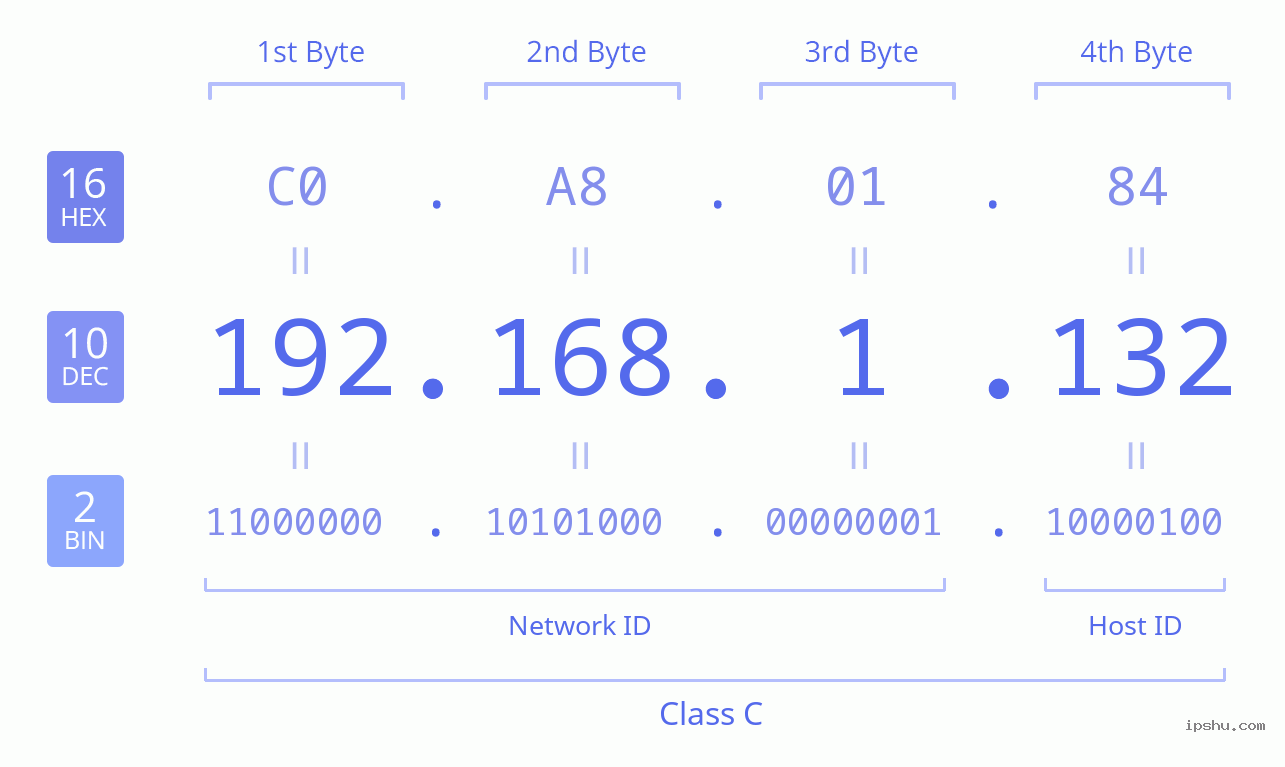
IP
IP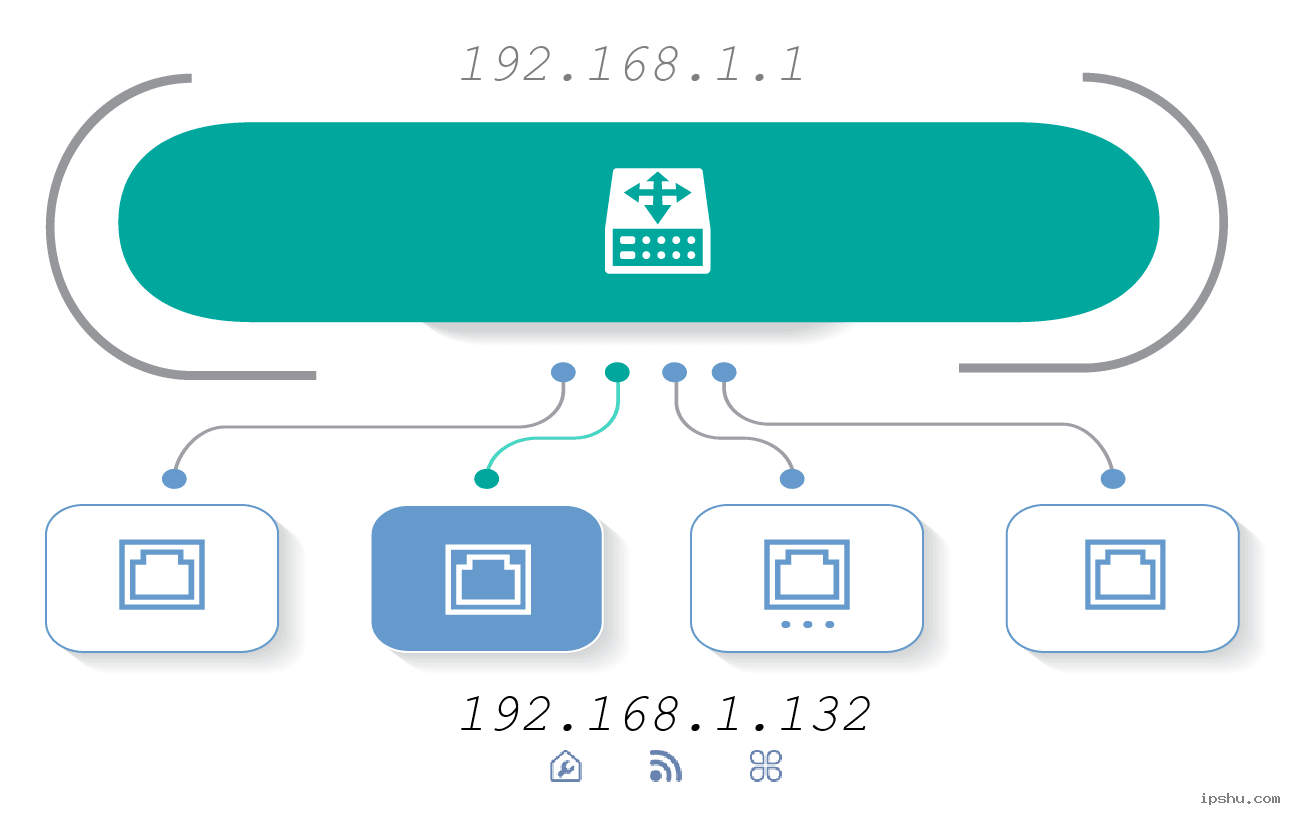 Icon / Image Meaning Table
The IP address 192.168.1.132 serves as a popular internal network gateway for a wide range of routers, regardless of their brand or model. This address is primarily employed to establish administrative access for routers, facilitating network administrators in configuring both the router and the associated network. It's crucial to recognize, though, that 192.168.1.132 is not a universal login address for all routers. Moreover, using 192.168.1.132 to access and manage router settings can sometimes lead to challenges. Below, we outline some frequently encountered issues along with their potential solutions, to assist users in navigating these scenarios.
Icon / Image Meaning Table
The IP address 192.168.1.132 serves as a popular internal network gateway for a wide range of routers, regardless of their brand or model. This address is primarily employed to establish administrative access for routers, facilitating network administrators in configuring both the router and the associated network. It's crucial to recognize, though, that 192.168.1.132 is not a universal login address for all routers. Moreover, using 192.168.1.132 to access and manage router settings can sometimes lead to challenges. Below, we outline some frequently encountered issues along with their potential solutions, to assist users in navigating these scenarios.
Content:
- How to use 192.168.1.132 to log in to the router's administration page?
- What are the reasons and solutions for 192.168.1.132 unable to access the router's administration page?
- What if I use 192.168.1.132 to log in to the router result in the login page of the Internet service provider?
- What is the username and password of routers using 192.168.1.132 as the login address?
- How to change the password of routers using 192.168.1.132 as the login address?
- How to restore the factory settings of routers using 192.168.1.132 as the login address?
1. How to use 192.168.1.132 to log in to the router's administration page?
Based on our earlier discussion, 192.168.1.132 is typically the administrative login address for routers. To log in to the admin page, follow these three straightforward steps:
- Verify that 192.168.1.132 is indeed your router's login IP. This information can often be found on a label at the bottom of the router.
- Connect your computer or phone to the router. Laptops and phones can connect via WiFi, while desktops require a network cable connected to the router’s LAN port.
- Open a browser of your choice, such as Edge or Chrome, type 192.168.1.132 in the address bar, hit Enter, or directly navigate to http://192.168.1.132. This action will lead you to the router's management login panel.
- At the login page, input your username and password, then click 'Login' to proceed to the router’s settings and management.

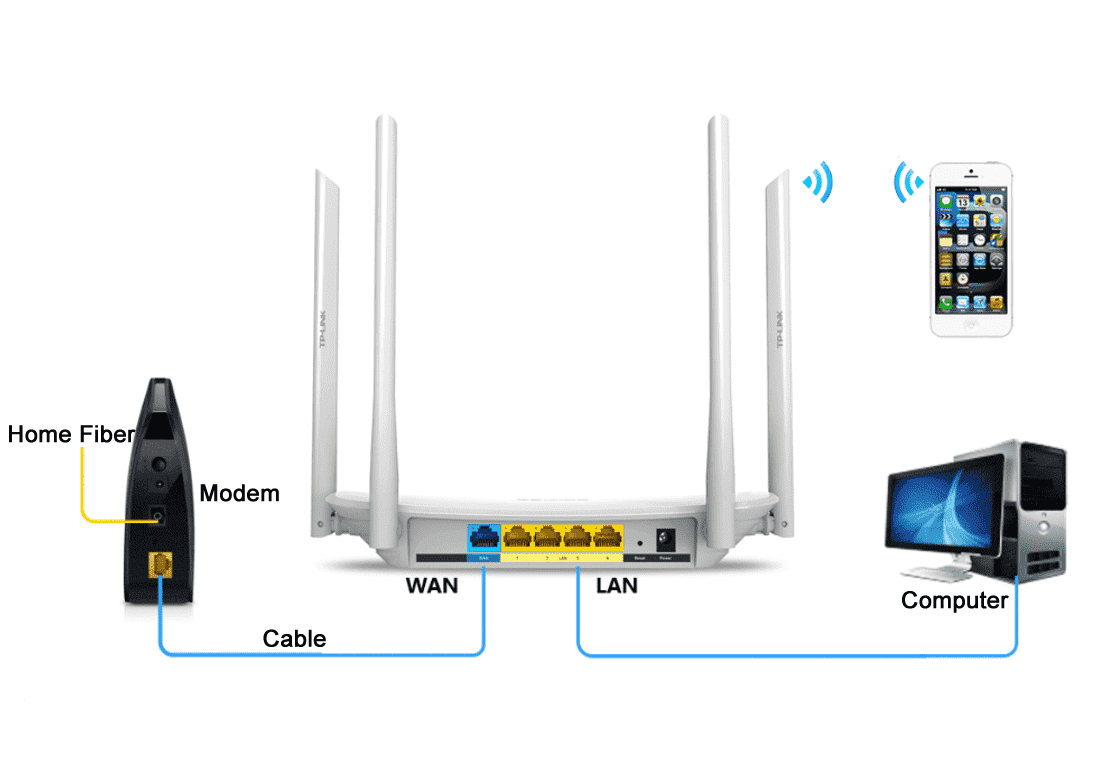

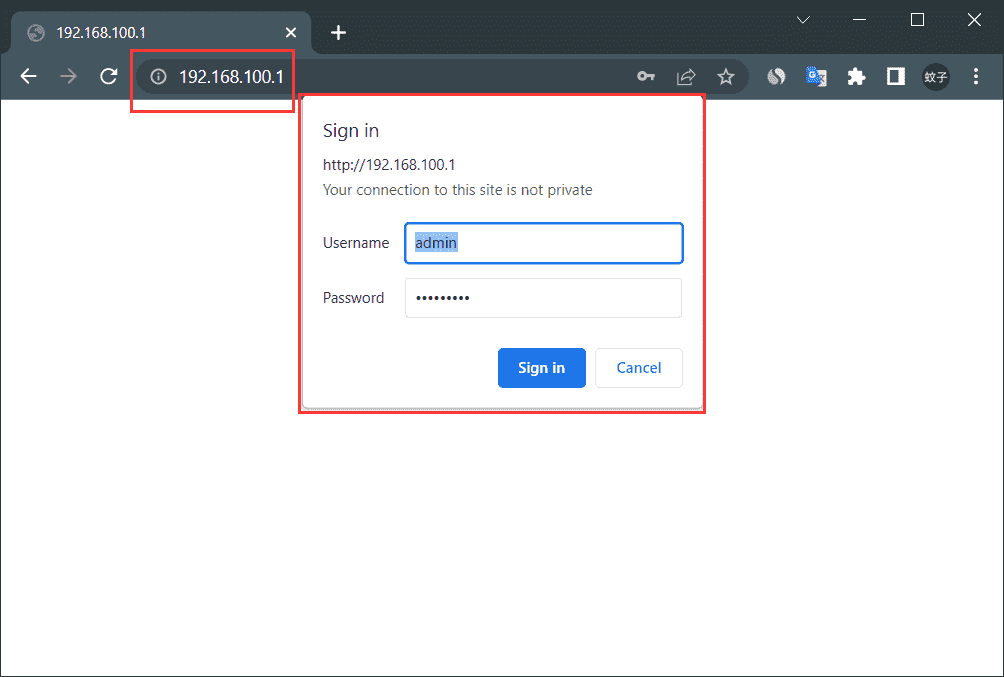
Note: The login management address can vary among different router brands and models. It’s essential to know your router's specific management address. While 192.168.1.132 is a standard default login IP for many routers, several utilize alphabetic addresses like melogin.cn, falogin.cn, tplogin.cn, miwifi.com, etc. These and other details under the general label in the management page indicate the router's admin address. Remember, this address can be modified, and using an outdated address post-modification will result in login failure. To find the current IP address of your router, connect to its WiFi network with a computer or phone and check accordingly. For detailed guidance, refer to How to find the router IP address?
2. What are the reasons and solutions for 192.168.1.132 unable to access the router's administration page?
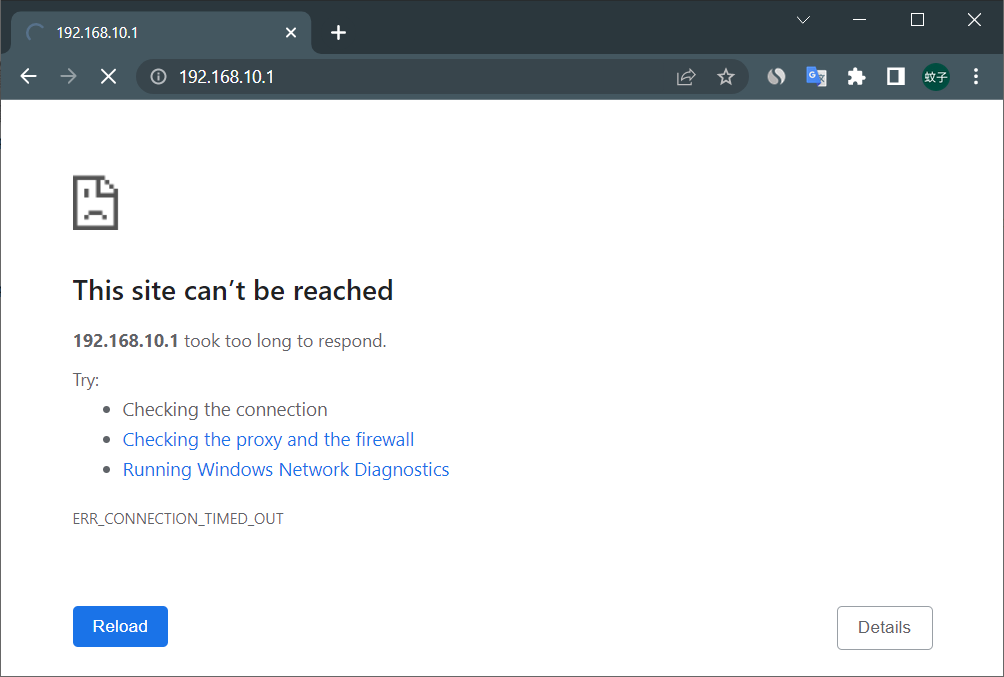
As previously discussed, 192.168.1.132 is typically the login address for router settings. If you can't open the router login page using this address, let’s delve into the potential causes and solutions for this common issue.
The reasons why accessing the router settings via 192.168.1.132 might fail can be categorized into five main areas:
(1) Incorrect local IP configuration on the computer
If the local IP of your computer was previously configured but not correctly, it could prevent router login. The solution is to set the computer's IP address to be obtained automatically. For instance, in Windows 10:
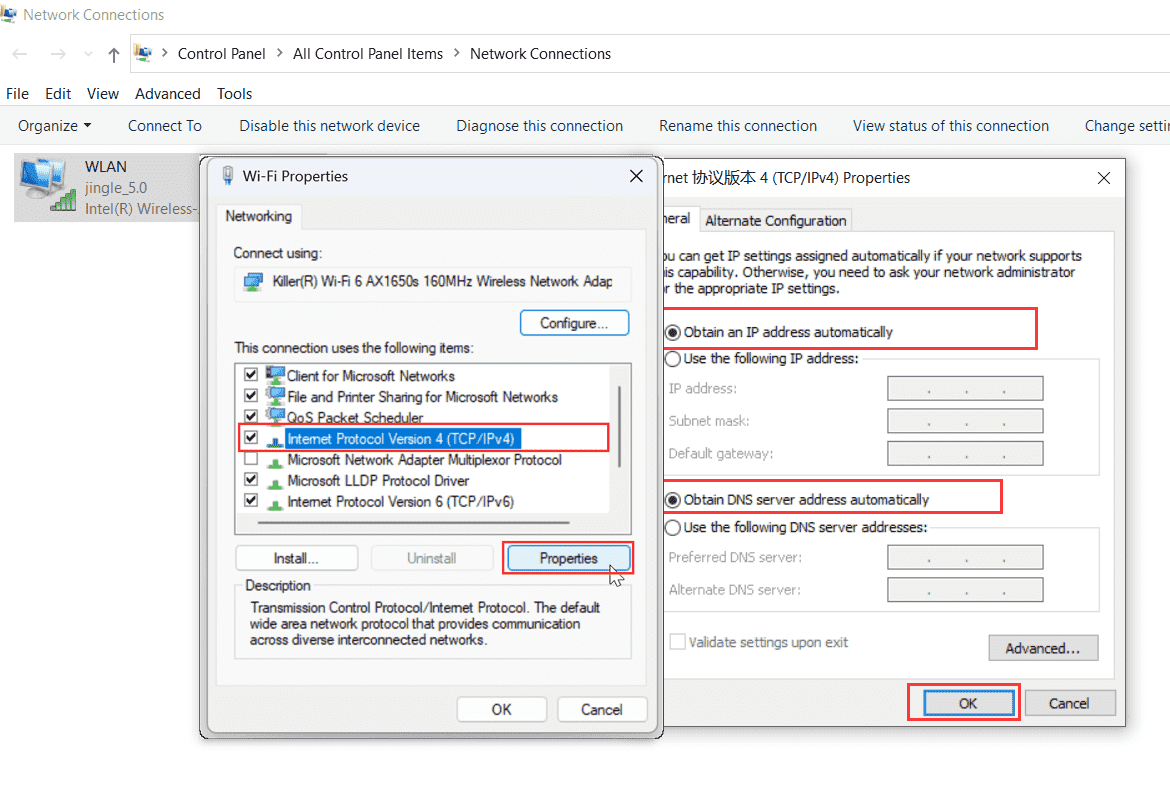
- First, right-click the 'Start' button in Windows 10 → select and open 'Network Connections'.
- Next, right-click 'Local Area Connection' → choose 'Properties'.
- Then, select 'Internet Protocol Version 4 (TCP/IPv4)' and click on 'Properties'.
- Finally, select 'Obtain an IP address automatically' → 'Obtain DNS server address automatically' → click 'OK'.
Ignore this issue if your computer’s IP is already set to default auto-obtain.
(2) Router connection issue
Ensure proper connection among your computer, modem, and router.
The external phone line or fiber should be connected to the modem, which in turn connects to the router's WAN port via a network cable. For laptops or phones, use WiFi to connect to the router; desktops need a network cable connected to the router's LAN port.
(3) Network cable problem
If the network cable connecting your computer and router is faulty, such as being damaged or having aged connectors, it will prevent you from opening the router login page. It's important to ensure the cable is in good working condition. If you have a spare cable at home, try replacing it with one that is intact and securely connected, and then try again to open the 192.168.1.132 login page again. Additionally, you can check the network status icon in the bottom right corner of your computer or use the 'Ping 192.168.1.132' command to verify the connection.
(4) URL input error in browser
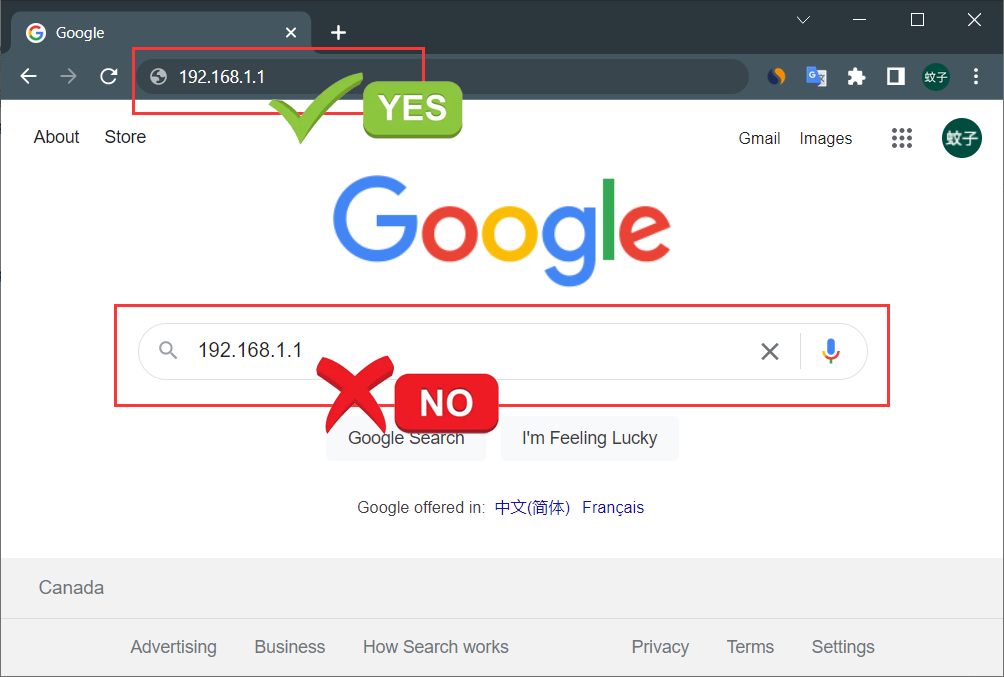
Many browsers open with a large search box on their homepage, such as Google, Bing, or Baidu. A common mistake is to enter the address 192.168.1.132 into this search box, which will not lead to the router login page. Instead, the correct way to enter 192.168.1.132 is in the browser's address bar, located at the very top of the browser, where website addresses are displayed. This ensures that the browser directly navigates to the router's login page rather than searching for the address as a query. The correct position is shown in the following figure:
(5) Router settings issue
Some users mistakenly believe that the IP address of all routers is 192.168.1.132, but in reality, not all routers have 192.168.1.132 as their default login website. Different brands and models of routers may have different login addresses. If your router's IP address is not 192.168.1.132, then using this IP will definitely not open the router settings page. Therefore, you need to confirm whether the IP address of your router is actually 192.168.1.132, which can be found on the label at the bottom of the router.
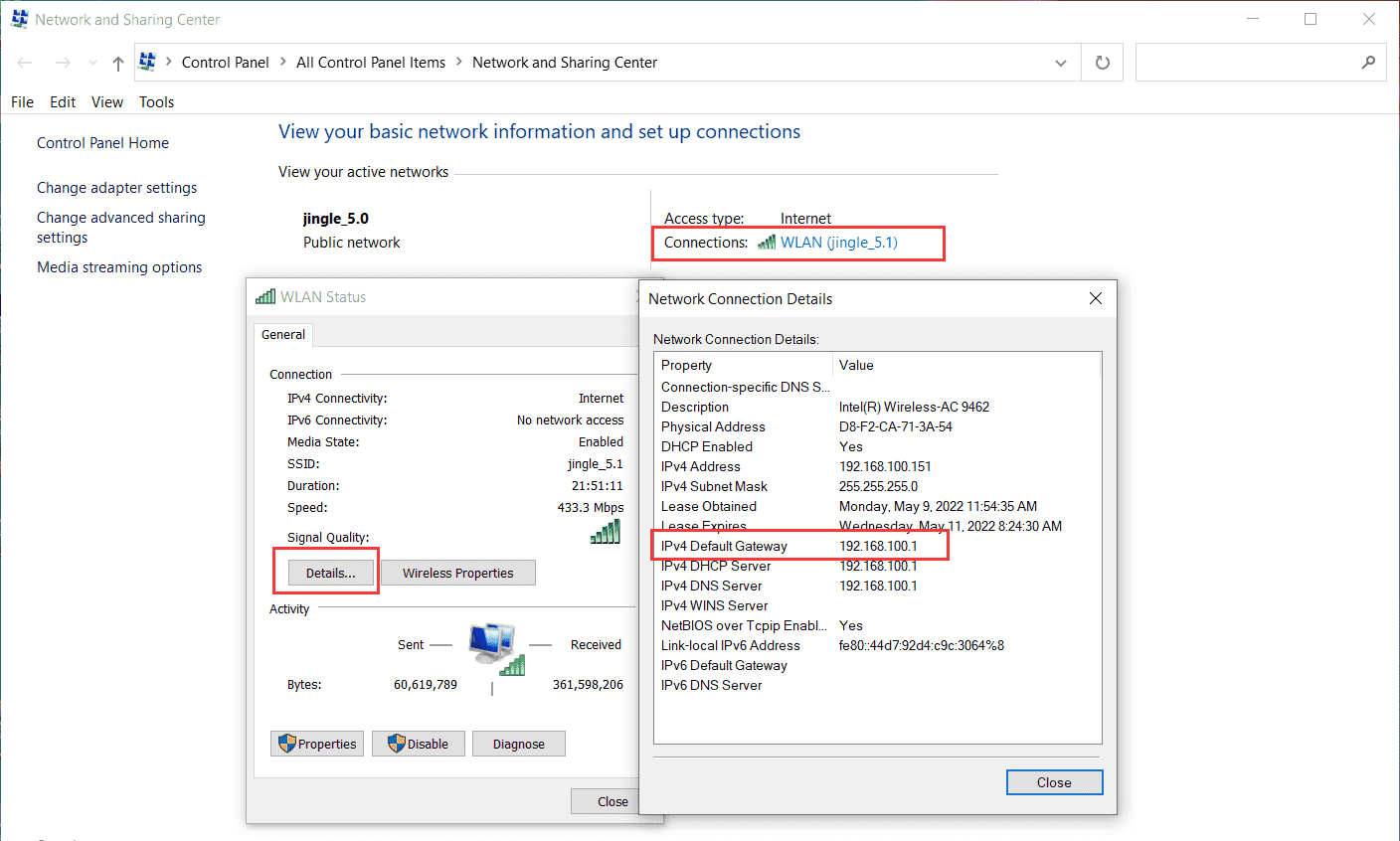
Another situation is that the router's default IP address has been modified. Some users modify the default address for increased security. After such modification, 192.168.1.132 will no longer be the valid login address, and the new, modified address must be used. To determine the real login address of your router, you can:
- Right-click the 'Start' button on Windows 10 → select and open 'Network Connections'.
- Right-click 'Local Area Connection' → select 'Status'.
- Click 'Details'.
- Locate the 'IPv4 Default Gateway' in the details page, which will indicate the current login IP of the router.
These are the common causes and solutions when 192.168.1.132 fails to open the router settings page. If these steps don't resolve the issue, consider resetting the router to its factory settings before attempting to log in again. For guidance on resetting the router, refer to How to restore the factory settings of routers using 192.168.1.132 as the login address?
3. What if I use 192.168.1.132 to log in to the router result in the login page of the Internet service provider?
When inputting 192.168.1.132 in your browser, you might expect to see your router's login screen but find the ISP's login interface instead. What could be the reason? What is the actual login address of the router, and how can one access the router's login interface?
If your router's administration address is indeed 192.168.1.132, but it opens the ISP's broadband login page, it could be due to the following reasons:
(1) IP address conflict between the router and the optical modem
Both the ISP-supplied optical modem and your router might default to the same IP address: 192.168.1.132. This overlap can lead to accessing the ISP's interface instead of your router's when attempting to log in.
Solution: Change the router's IP address. The method is as follows:
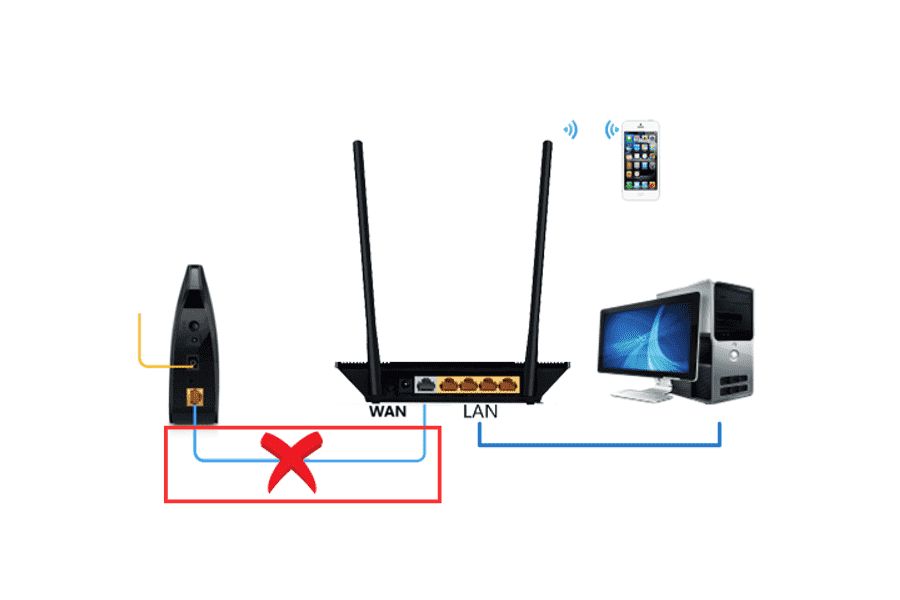
- Disconnect the router's WAN port from the optical modem, ensuring only the computer is linked to the router's LAN port. As shown below:
- Log into the router's setup by typing 192.168.1.132 in your browser's address bar.
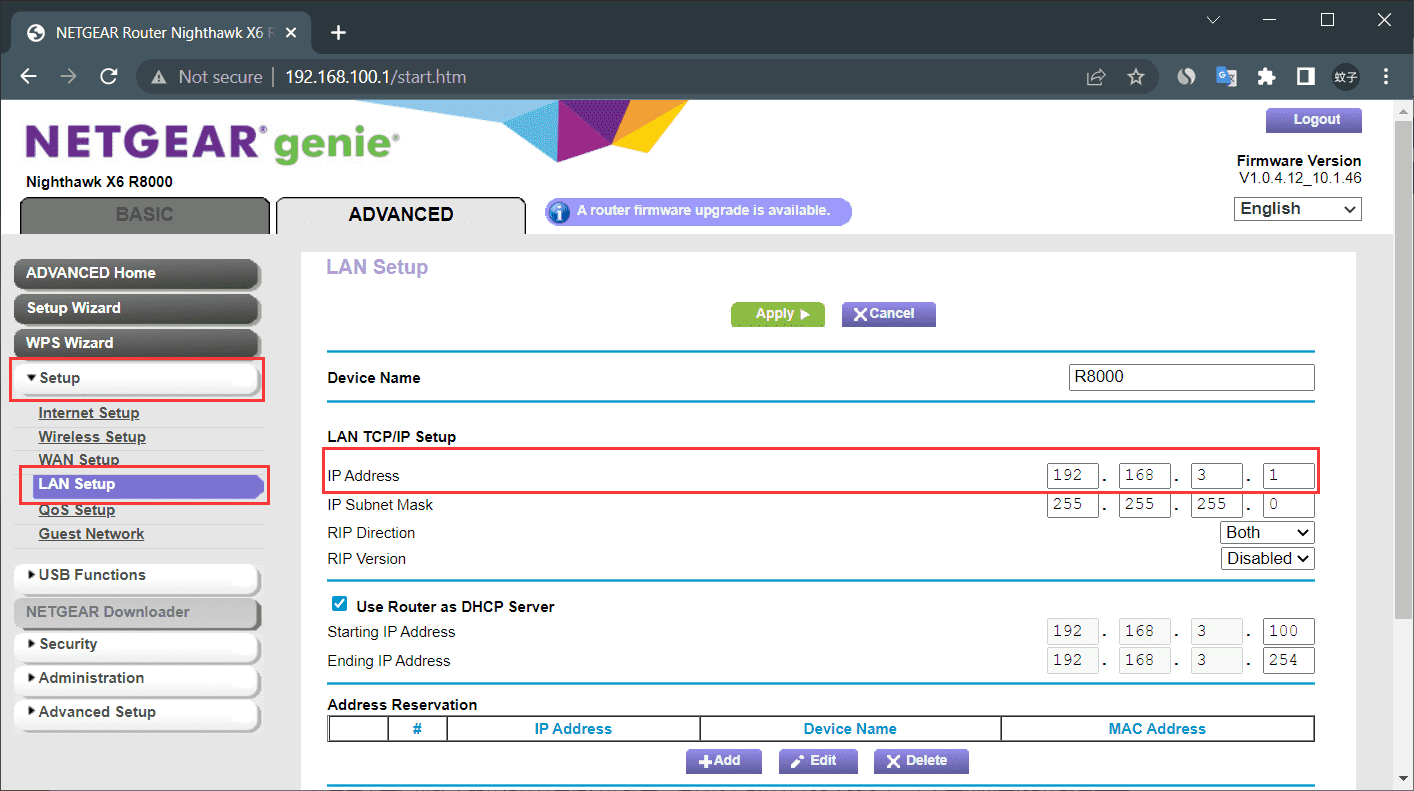
- In the router settings, navigate to 'LAN Port Settings' (or similar) and change the IP address (e.g., to 192.168.3.1). As shown below:
- Reconnect the WAN port to the optical modem and use the new IP address to open the router's login interface.
Important note:
Do not worry about the computer not being able to access the internet after unplugging the router's WAN port cable, as internet access is not necessary for setting up the router. Simply connect the computer to the router's LAN port with a network cable, or connect a laptop/mobile phone to the router via WiFi to open the router's settings page and configure the router.
(2) The router's IP address has been modified
If users are unaware that the router's IP address has been changed and still enter the default 192.168.1.132, the ISP's login page may also appear.
Solution: Enter the updated router IP address to access the settings. You can find the current IP by checking the 'IPv4 Default Gateway' in your computer's Ethernet settings. As shown in the figure below, the IP address following 'IPv4 Default Gateway' is the router's current IP address.
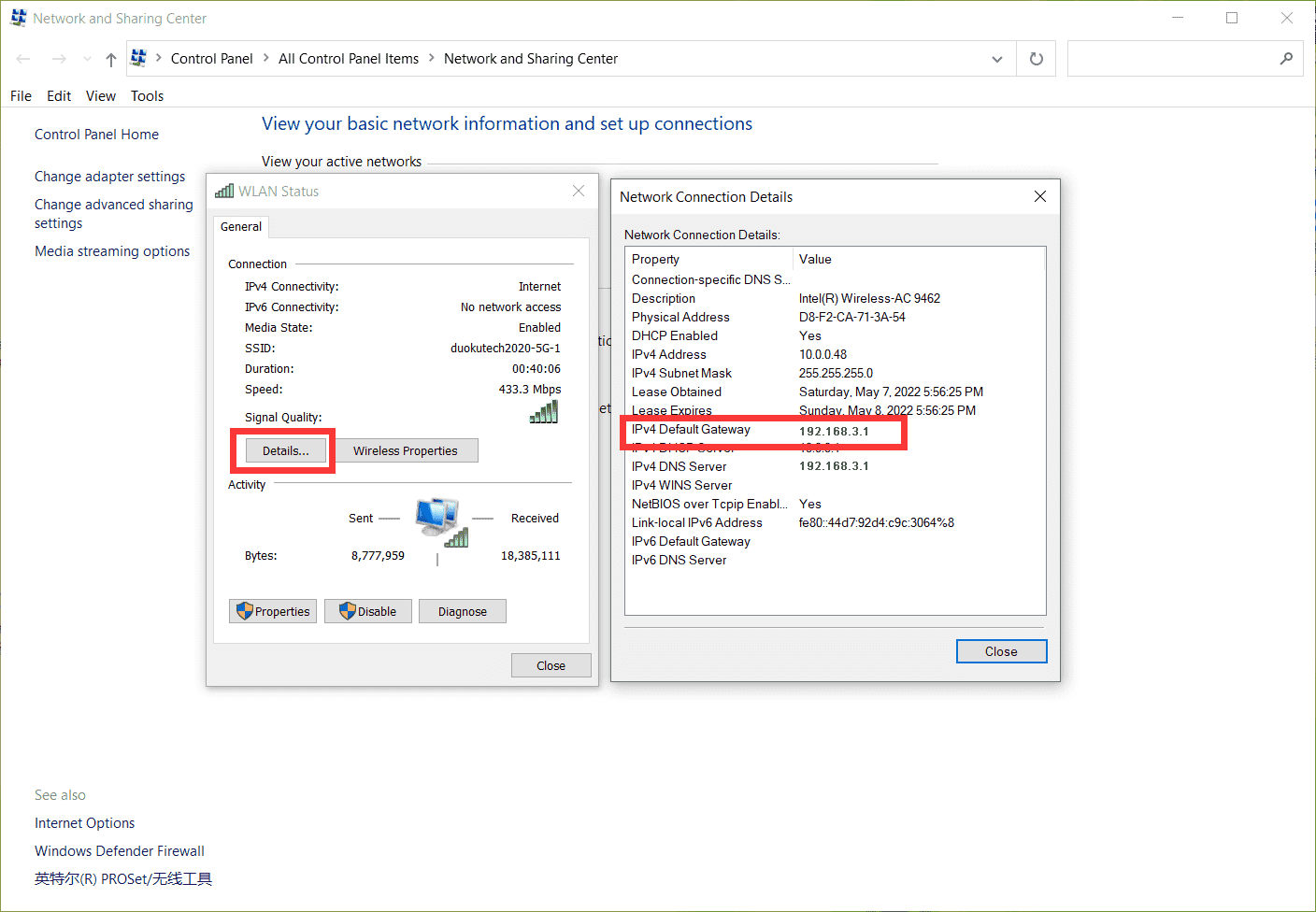
That means, to open the router's login page, you need to enter 192.168.3.1 in the browser now.
Note:
① The router's login IP address can be manually modified.
② Many modern routers will automatically change the IP address. When the router's WAN port is connected to the optical modem, and if the router auto-detects that its IP address is identical to that of the optical modem, the router will automatically adjust their IP to prevent conflicts when connected to an optical modem.
5. How to change the password of routers using 192.168.1.132 as the login address?
To safeguard your network and prevent unauthorized access, it's crucial to update your router's default username and password. Here's a guide on how to access 192.168.1.132 to update both the router's login and WiFi passwords.
(1) How to change the router's login password?
If you already know your current password, follow these steps:
- Log in to the router's administration page (refer to question 1: How to use 192.168.1.132 to log in to the router's administration page?).
- In the router's administration settings interface, click 'Advanced'→'Administration'→'Set Password'.
- Enter the old password and new password, and then apply them.

Note:
After updating the router's admin login password, it's crucial to correctly enter this new password for all subsequent logins. To ensure smooth access in the future, it's recommended to memorize the updated password. Alternatively, you could write it down on a note and attach it to the back of the router to prevent any inconvenience caused by forgetting the password.
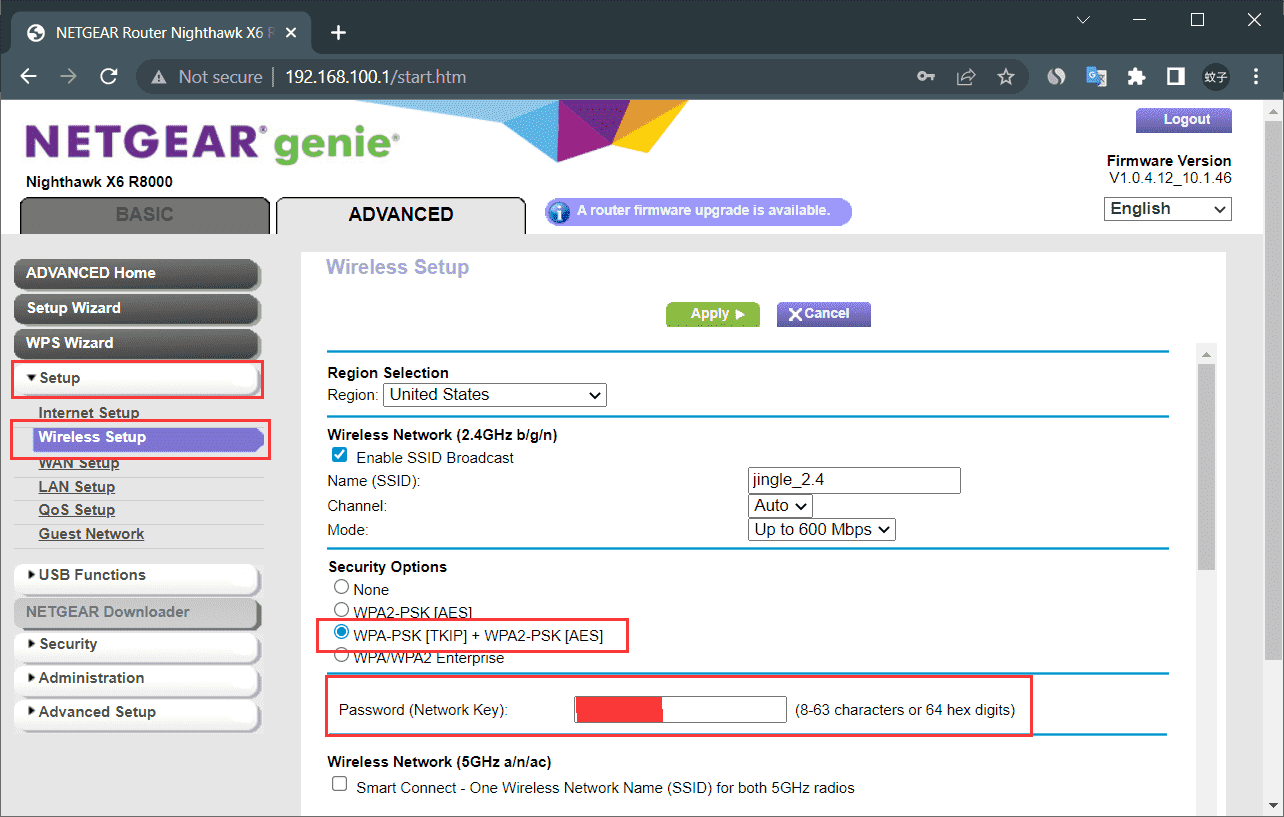
(2) How to change the wireless network password (WiFi password)?
The process to change your WiFi password is similar to updating the login password and also requires logging into the router's administration page.
- Log into the router's administration page (refer to question 1: How to use 192.168.1.132 to log in to the router's administration page?).
- After successfully logging in to the router's administration settings interface, click 'Advanced' → 'Setup' → 'Wireless Setup' and select 'WPA-PSK/WPA2-PSK'.
- Enter the PSK password (WiFi password) and then apply it.
3 authentication types: automatic selection, WPA-PSK, WPA2-PSK. There is basically no difference between the 3 types. Just select automatic.
3 encryption algorithms: automatic selection, TKIP, AES. AES encryption algorithm is generally recommended.
6. How to restore the factory settings of routers using 192.168.1.132 as the login address?
If your router settings are messed up and you can't access the internet, how can you reset the router to factory settings by logging into the 192.168.1.132 administration page? Generally, there are 2 ways to restore factory settings: through the router's administration page or by pressing the RESET button on the router itself.
(1) How to restore factory settings from the router's administration page?
- Log in to the router's administration page (refer to question 1: How to use 192.168.1.132 to log in to the router's administration page?).
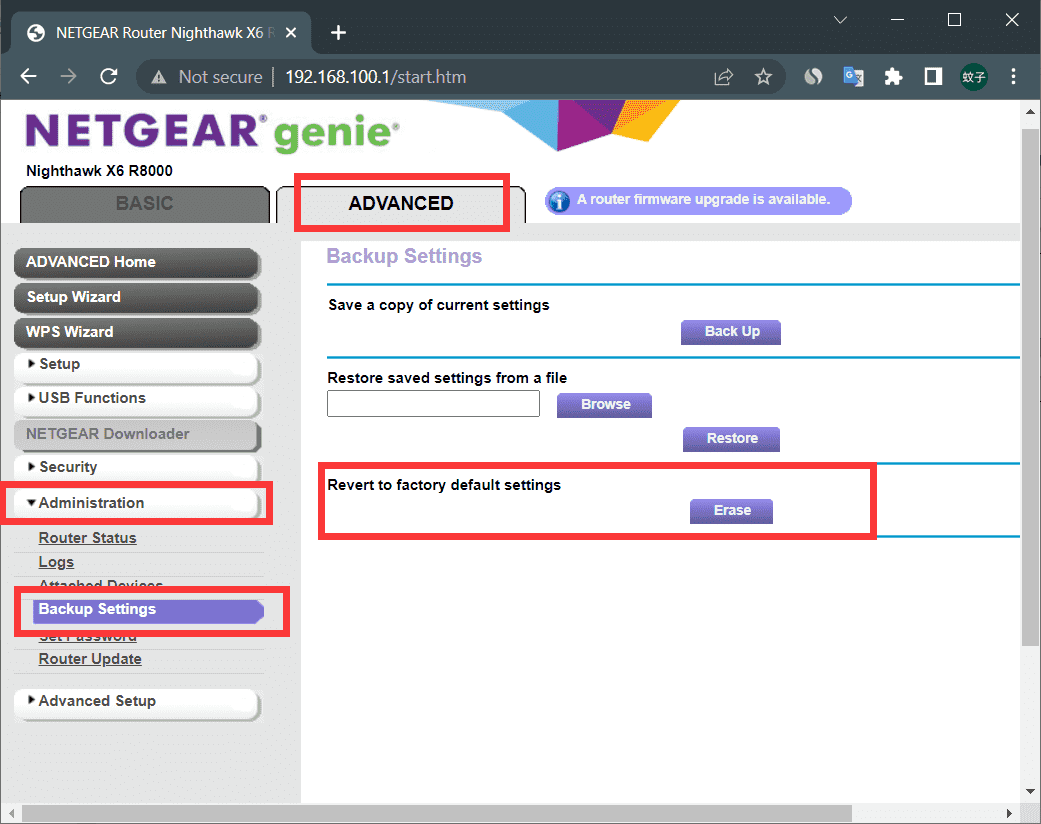
- After successfully logging in to the router's administration settings interface, click 'Advanced' → 'Administration' → 'Backup Settings'.
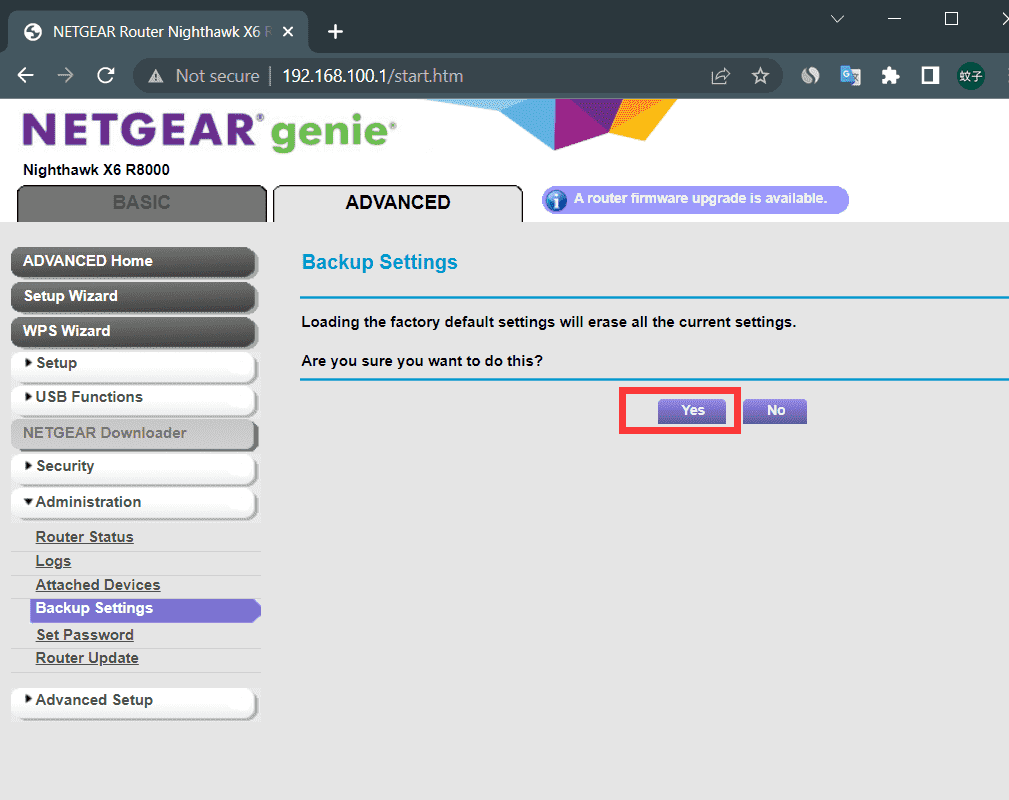
- Click the 'Revert to Factory Default Settings' button, A dialogue box will appear asking if you are sure about resetting to avoid accidental operations that could affect normal internet usage.
- Confirm by clicking 'OK'. The router will reboot and revert to its default settings.
This method is only applicable if you know the router's account and password. If you have forgotten the login information, don't worry, we have another method to reset the router, let's go ahead.
(2) How to reset the router to factory settings by pressing the RESET button?
- Find the RESET button on your router. It could be a pushable button or a small, pinhole-sized button requiring a pin or similar tool for pressing.
- Make sure the router is on, indicated by a lit power light.
- Press and hold the RESET button for about 10 seconds, then release. All lights will flash and then turn off. After a few seconds, the router will restart, indicating a successful reset to factory settings.

Note:
① Ensure the router remains powered on during the reset process to avoid potential hardware damage.
② Remember that resetting erases all previous configurations. You'll need to reconfigure your router settings to reconnect to the internet. Proceed with caution to avoid any connectivity issues.